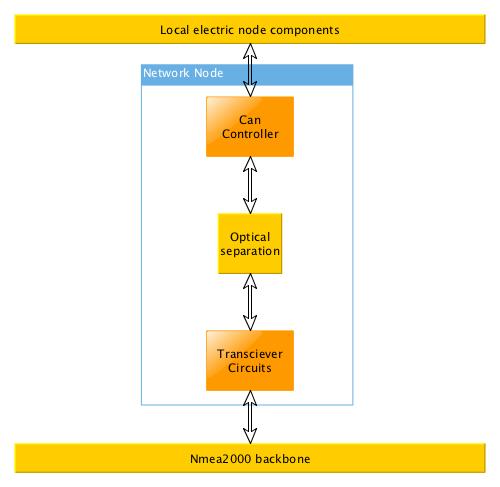
Note: It is device connected to NMEA2000 Backbone which is intend to exchchange
informations between other devices on NMEA2000 Backbone. It can have its own electrical
interfaces to other child devices it controls.
Note:
Damage of network by currents and voltages
The Network node MUST be optically isolated between the NMEA 2000Backbone and
it's controller. Just minimum transciever circuits should be connected to backbone.
NMEA2000 Backbone
This is the network based on the Network Cables, Network Splitters, Drop Cables to
Devices. Depending on the Network Length it allows to run multiple speeds
Network Topology
The topolog of network is single bus - without any loops or crossings. It must be
single linear from one end to other end. Every device is connected to the NMEA2000 Backbone
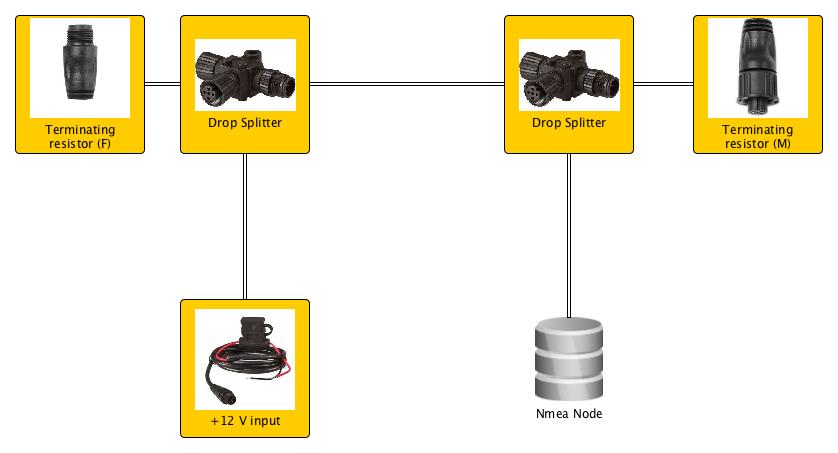
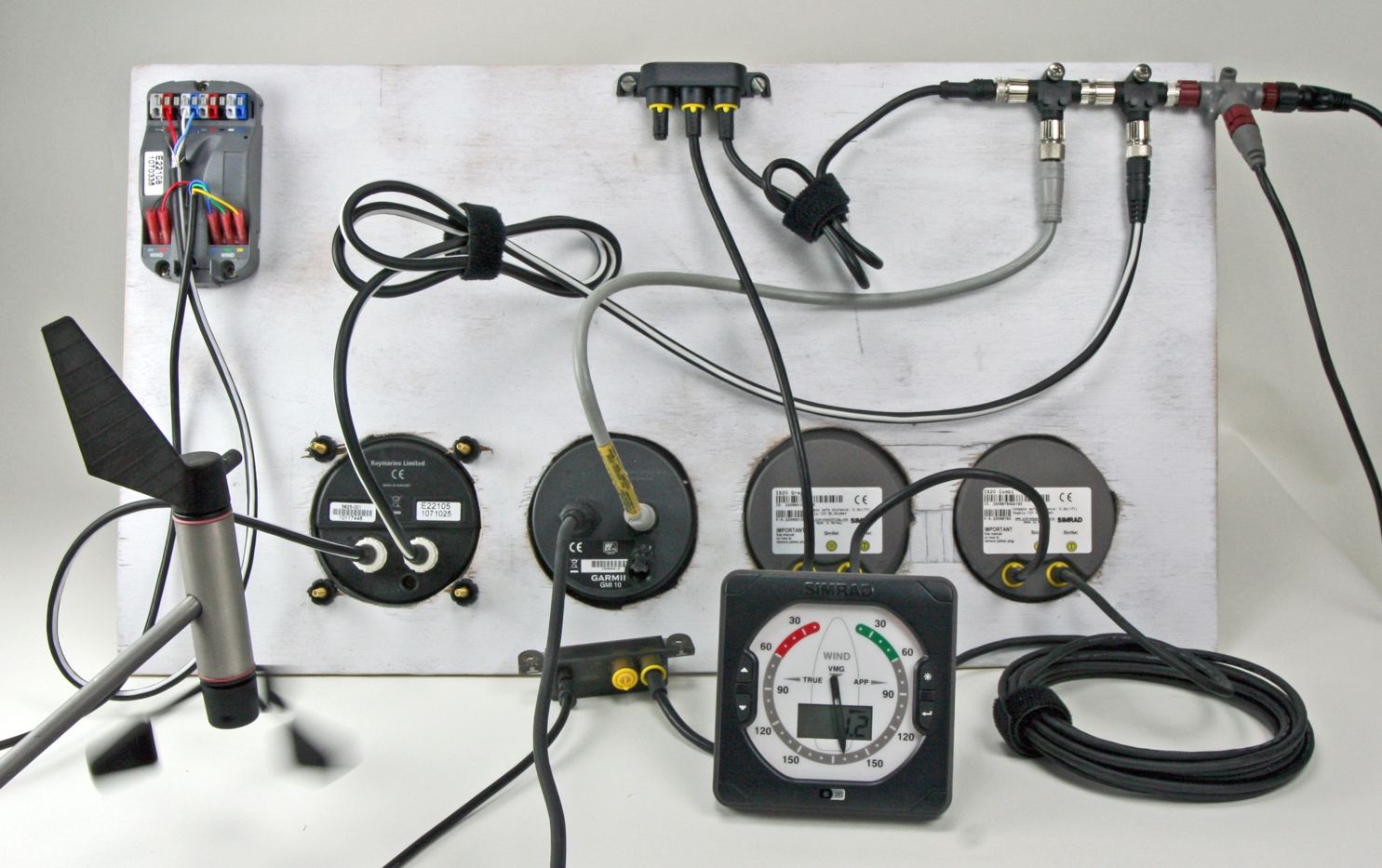
Figure: Sample nmea network
Trunk and Drop
Backbone and Drop
Drop Connection
When we want to connect some device to the NMEA2000 Backbone, there is showed wirings.
Backbone Termination
There is need to terminate each of the NMEA2000 Backbone ends this way:
Maximum Length and Speeds of the network
Maximum speed is determined by the moment every node in NMEA2000 Backbone is able to talk to each
and share the same.
Note:
1,000 kbits/second - 25 meters
500 kbits/second - 75 meters
250 kbits/second - 200 meters – NMEA 2000 Standard
Note: Direct Battery - only one 12V battery in signle point can be connected to the
NMEA2000 Backbone
Note: Isolated Power Supply - multiple 15V isolated power supplies can be inserted
anywhere in the NMEA2000 Backbone for redudancy and to
balance load of current taked